
Humanoids Summit 2025 Day 1
Lots of talks on dexterity through data and foundation models

I am attending the Humanoids Summit in Mountain View, CA this week.. and wow, I am amazed at the progress that has been made since I attended the same summit last year. The attendance seemed to have doubled, the main conference hall room and the exhibit halls were overflowing with people. While talks last year were splashy and focused on proof of value, this years’ talks have focused on commercialization aspects and achieving high success rate of tasks in environments unseen by the robot or its training data.
This article will focus specifically on talks from Skild AI and Physical Intelligence, two of my favorite startups in the robotics space, and about whom I have written before. Please refer to my previous pieces on Skild AI and Physical Intelligence for more background.
Skild AI
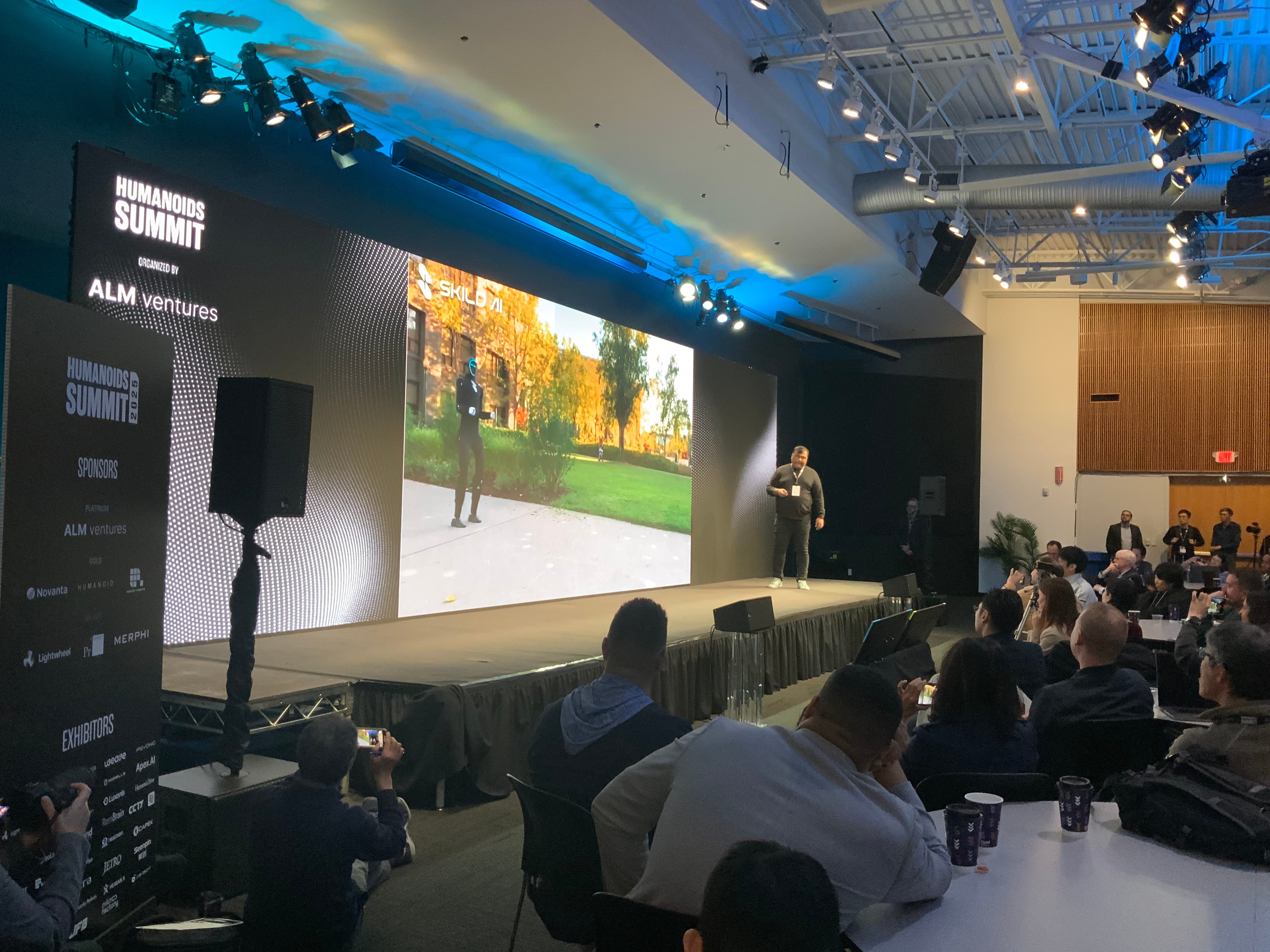
Abhinav Gupta, the co-founder of Skild AI gave a talk outlining the progress of their foundation model, and his presentation was both honest and detailed on many fronts. Abhinav walked through the steps to improve the datasets that need to be gathered to train a robotics foundation model: from (i) designing their first self-learning robot that pick up pieces randomly and self generates success and failure data, to (ii) then building a dataset via teleportation, to (iii) then building datasets via simulation, and finally building a dataset using YouTube video datasets.
Skild AI is building a foundation model using data covering a wide horizontal spectrum of multiple scenarios, multiple tasks, and multiple hardware. As per Abhinav, using vertical data from a restricted task gets one to 80% success rate quickly, but does not succeed in solving for edge cases.
The part of generating data from YouTube videos is SkildAI’s secret sauce. Abhinav referred to the aspect of using videos as a dark art. SkildAI’s model is pretrained with simulation and human videos and then post-train using teleoperation data. The talk proceeded to show videos in which a robot with SkildAI’s model is able to insert Ethernet cables into the ports on computer servers and beat humans at the speed. Another interesting video showed a quadruped robot adapting on the fly, even after the limbs are broken.
On the funding side, there is news this week that SkildAI is may be funded by nVidia and Softbank at a valuation of $14 Billion.
Physical Intelligence
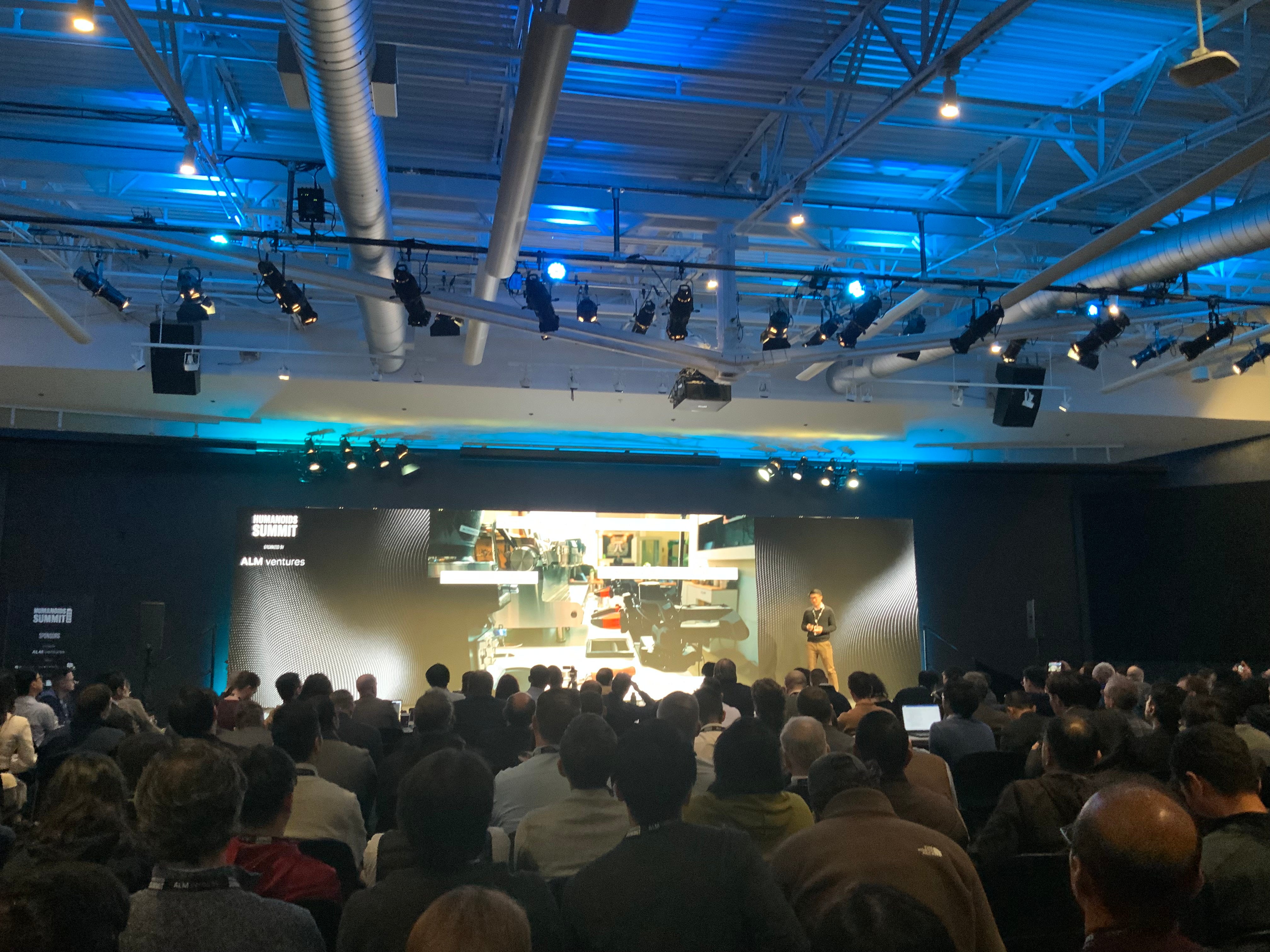
Physical Intelligence had a research talk on how they improved from their first foundation model (π0) to their latest foundation model (π0.6) with dexterity achieved through data diversification. Some of the efforts included deploying robots in an AirBnB in San Francisco and asking operators to show different tasks. To generate a data flywheel, they would have humans help identify failures and label a trajectory of operations as good or bad.
The talk showed some interesting videos on how a robot would learning how to open a cabinet drawer. The robot was previously trying to turn the knob of the drawer, but then it learns to pull the handle of the drawer. The talk then demonstrated how they deployed the π0.6 model to make coffee using an expresso machine in their lab. The demo is cool, you can request a coffee via slack, and arrive at the expresso machine to find it ready for pickup. A robot with the π0.6 model can also work at an unseen home, clean it up, and operate for many hours before human intervention. One of their partners, Dandelion chocolate has been using this technology to pack boxes of chocolates and achieve a failure rate of less than 5%.
More topics
There were many more talks on robot foundation models, robots built for industrial use cases, lightweight and programmable robots, besides much interesting information from the exhibit areas. I will sort out my notes and post interesting snippets for paid members.
The conference continues tomorrow. I have been posting live on the Notes section and will keep posting live tomorrow.
And if you would like more content from this conference (and many others), please consider sponsoring my work with a paid membership. A gift to a friend or family member also goes a long way.